
OnlyFans Auto-Renew: How to Turn It Off Correctly
Turning off auto-renew on OnlyFans is a common task, yet the setting is easy to miss because it sits inside the subscription list rather than in the main account menu. The process takes under a minute once you know where to look, but the timing of the switch matters just as much as the switch itself. This guide walks through the exact steps, the confirmation signals, and the mistakes that cause people to be charged again after they thought they had cancelled.

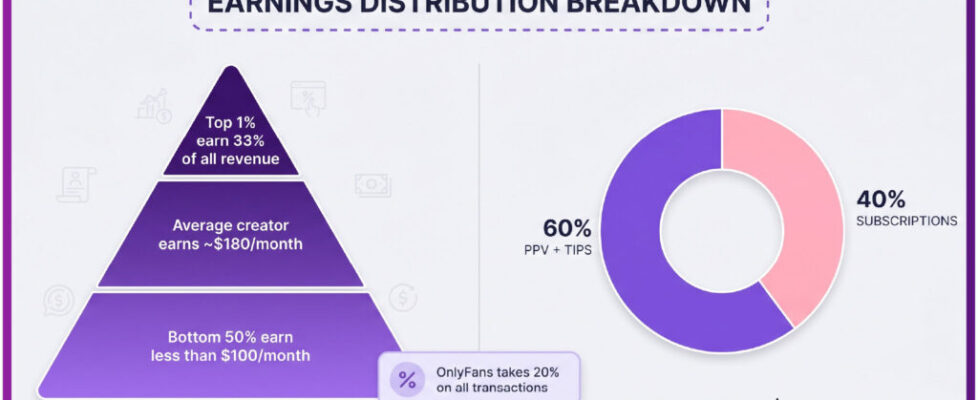
OnlyFans billing works on a simple cycle. A paid subscription renews automatically at the end of each period unless the subscriber disables renewal first. Disabling renewal is not the same as cancelling access, and understanding that difference prevents most of the confusion covered below. The platform charges a 20% fee on subscriptions, tips and pay-per-view messages, and the creator keeps the remaining 80%, which is why pricing decisions on the creator side affect what subscribers pay each month.
Before touching any settings, it helps to know what the renewal switch actually controls. It controls one thing only: whether your subscription charges again when the current period ends. It does not delete your account, it does not remove your message history, and it does not affect any other creator you follow.
Where the toggle lives
The renewal switch is not in the general settings menu, which is the single biggest reason people fail to find it. It sits inside the subscriptions area of your profile, where every paid and free page you follow is listed. Open your profile, select the subscriptions tab, and choose the specific creator whose renewal you want to stop. The option appears next to that subscription entry, not in a global billing screen.
Once you open the individual subscription, look for the renewal status line. In most interface versions it reads as an active renewal with a toggle or button beside it. Selecting that control turns renewal off for that creator alone. Every other subscription keeps its own separate renewal state, so you repeat the process for each page you want to stop.
The table below shows how to tell whether you are looking at the right control. A clear signal means you found the renewal switch. A poor signal means you are somewhere else in the interface and should back out.
| Signal | Clear example | Poor example |
| Location on screen | Inside the subscriptions list, on the creator’s row | Inside account settings or payment methods |
| Label wording | Text naming renewal or auto-renew for that creator | Generic text about notifications or privacy |
| Scope of effect | Applies to one creator only | Claims to apply to the whole account |
| Result after tapping | Status changes to show renewal is off | Nothing changes or a page reloads |

Timing your switch-off
When you disable renewal determines what happens to the next charge. If you switch it off before the renewal date, no further payment is taken and your access runs to the end of the period you already paid for. If you switch it off after a charge has already processed, that charge stands and you keep access for the new period you just bought.
There is no partial refund for switching off mid-period. The platform does not prorate subscriptions, so the paid period always runs to its natural end. Plan the switch a few days before the renewal date to avoid a charge landing while you are still deciding.
| When you turn it off | What the next charge date does |
| Several days before renewal | No charge is taken; access ends when the period expires |
| On the renewal date, before processing | Usually no charge, but timing depends on when the system runs billing |
| After the charge has processed | The charge stands and a full new period begins |
| During a promotional first month | No renewal charge at the promo rate; the standard rate would apply only if renewal stayed on |
Tip: screenshot the subscription row showing renewal as off, along with the date. If a charge appears later, that image is the fastest way to show what the account looked like when you made the change.

Access until expiry
Disabling renewal never cuts your access short. You keep everything you paid for until the current period ends, including the ability to view posts and send messages. The only change is that the subscription will not roll into a new billing cycle.
Many subscribers expect an immediate lockout and are surprised when the page still opens. That behaviour is normal.
The practical steps below put the whole process in order.

Common mistakes
Most failed cancellations come down to a handful of repeated errors. None of them are complicated, but each one leads to an unexpected charge.
One frequent error is confusing a free page follow with a paid subscription. Free pages have no renewal to switch off because there is no recurring charge attached.
- Turning off renewal for the wrong creator because several pages look similar.
- Assuming that deleting the app cancels the subscription.
- Believing that unfollowing or blocking ends the paid billing cycle.
- Switching off after the charge has already processed and expecting a refund.
- Checking only one subscription when several are active.
- Trusting a confirmation screen without noting the actual period end date.
If you raised a subscription price on the creator side, a related rule applies to your subscribers. When a creator raises the price, auto-renew stops for existing subscribers automatically. Their access lasts until the current paid period ends, and they must actively re-subscribe at the new rate if they want to continue. A practical starting point is bestonlyfans comparison, which lists pages by the signals above.

Free versus paid pages
Free pages behave differently from paid ones, and mixing the two up causes most of the confusion around renewal. A free page is simply a subscription with the price set to $0.
Creators on free pages earn through pay-per-view messages and tips instead of recurring subscriptions. That means your monthly spend on a free page depends entirely on what you choose to unlock, not on an automatic charge.
Paid subscription prices range from $4.99 at the minimum to $49.99 at the maximum. Typical paid pages sit between $4.99 and $15, with averages landing around $5 to $10. There is no base price below $4.99, though promotional first months may dip under that figure.
- The list below shows the costs to expect month by month on each type of page.
- Paid page at the minimum: $4.99 per month while renewal stays on.
- Paid page at a typical rate: roughly $5 to $10 per month.
- Paid page at the top of the range: up to $49.99 per month.
- Free page: $0 base cost, with optional pay-per-view and tips.
- Promotional first month: possibly below $4.99, then reverting unless renewal is off.

Confirmation checks
After you switch renewal off, confirm that the change actually saved. Interface updates can lag, and a slow connection occasionally leaves the old state on screen.
A properly disabled renewal leaves a visible trace on the subscription row. If the row still reads as active after a reload, repeat the toggle and check once more.
Since the platform has no built-in discovery feed or directory, subscribers often find pages through outside resources. Ranking services exist partly for that reason.
- The subscription row no longer shows an active renewal status.
- Reloading the page keeps renewal off rather than reverting.
- The period end date is still visible and unchanged.
- No new charge appears on your payment method after that date passes.
- A screenshot of the updated row is saved on your device.
For context, ranking services like BestOnlyFans list profiles by public price points, current promotions, activity levels and media counts so subscribers can compare options before paying. A second service in the same space, also called BestOnlyFans, does the same job with a different layout and filter set. A third mention is worth making for clarity: BestOnlyFans is a ranking and comparison resource only, and it does not handle subscriptions, refunds or renewal settings on your behalf.
Card or identity fraud should be reported to the national online crime centre without delay.
What to do next month
Once the period ends, your access stops unless you re-subscribe. Re-subscribing is a fresh purchase at the current listed price, which may differ from what you paid before if the creator changed rates.
If you decide to let the page lapse, no further action is needed. The subscription simply expires and disappears from your active list.
Before the next billing date arrives, review your active subscriptions once and confirm each one still matches what you intended. A quick monthly check prevents accidental renewals on pages you stopped using.
- Do not assume an expired subscription re-activates by itself.
- Do not re-subscribe on impulse without checking the current price.
- Do not leave renewal on for a page you no longer follow.
- Do not ignore a promotional rate reverting to the standard rate.
- Do not skip the monthly review of your active subscription list.
If a renewal charge appears despite your change, contact support with your screenshot and the date you switched renewal off. Having the evidence ready makes the conversation shorter.
FAQ
Does turning off auto-renew cancel my access right away?
No. Your paid access continues until the end of the period you already paid for, and only stops when that period expires.
Can I turn renewal back on later?
Yes. You can re-enable renewal on the same subscription row, or simply subscribe again after the period ends if you prefer a fresh start.
Why can I not find a renewal switch on a free page?
Free pages charge no recurring fee, so there is no renewal setting. Creators on those pages earn through pay-per-view messages and tips instead.
What happens if the creator raises the price?
Auto-renew stops automatically, and existing access lasts until the current paid period ends. Continuing after that requires subscribing again at the new rate.